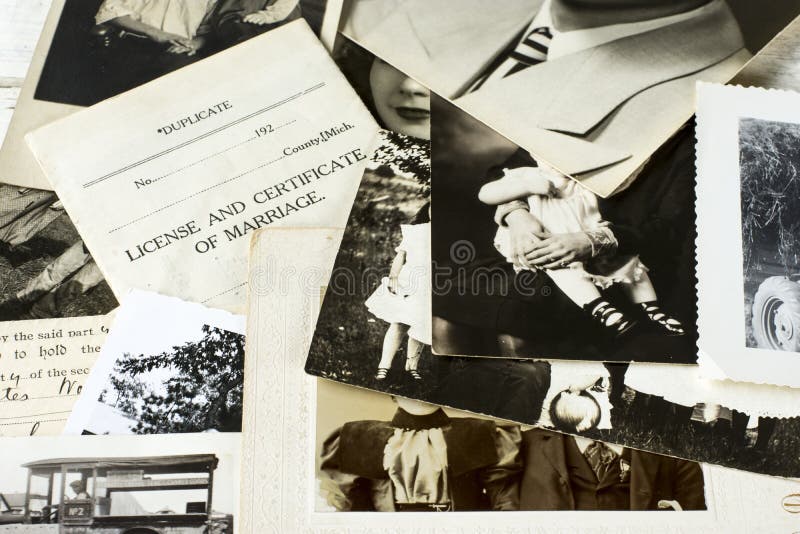
Records & Archive Research
The documentary record of human life is vast, scattered, and irreplaceable. Our archival researchers know where the records are, how to access them, and how to read them in the context that makes them meaningful.
The Archive as Living Memory
Every Document Is a Window Into a Life Once Lived
Long before the internet, long before centralized databases, long before the idea of digital preservation, people recorded the events of human life in documents. Birth certificates and baptismal registers recorded the arrival of new souls. Marriage bonds recorded the formation of families. Wills and estate inventories recorded the distribution of what people accumulated — and when they listed all the children, named the enslaved people by name, or described a property's contents in detail, gave us portraits of lives we would otherwise know nothing about.
The challenge is not that these records don't exist — in most cases they do, far more extensively than most people realize. The challenge is that they are scattered across hundreds of thousands of repositories: county courthouses, state archives, national archives, church archives in half a dozen countries, university special collections, and microfilm reels that have never been digitized.
Finding the right record requires knowing where to look — and knowing where to look requires years of accumulated archival knowledge that cannot be Googled. Our researchers have logged thousands of hours in physical archives, established working relationships with archivists at institutions across the country and overseas, and developed the intimate knowledge of specific record collections that allows us to find things automated searches miss entirely.
Vital Records, Census Records, and the Backbone of the Family Record
Vital records — official government registrations of births, marriages, and deaths — are the primary documentary evidence in genealogical research, and their availability varies enormously by state, by time period, and by the specific circumstances of the person being researched. The United States did not require statewide vital registration in most states until the early twentieth century: Louisiana began statewide death registration in 1911, birth registration in 1918. Before those dates, births and deaths were recorded only if a church chose to keep records, a local government maintained registers, or a family Bible entry was made.
Federal census records are among the most important genealogical resources in existence, available beginning with the 1790 census. The census taken every ten years captured household composition, ages, birthplaces, occupations, property values, and — beginning in 1880 — relationships between household members. The 1940 census, the most recent federally available under the 72-year privacy rule, provides addresses, occupations, education levels, and income information. Reading census records critically — understanding what each question asked and what the answer meant given the context — is a skill that produces far more information than a simple name search.
The 1890 federal census is a tragic gap: approximately 99 percent of it was destroyed in a warehouse fire in 1921. Researchers working on families in the 1880s to 1900s must bridge this gap using state censuses (where they exist), city directories, voter registrations, school records, and any other sources that can document a person's existence and location in the missing decade.
Military Records: From the Revolution to Vietnam and Beyond
Military records are among the richest genealogical sources available for American families, and their depth is frequently underestimated even by experienced researchers. From Revolutionary War pension files to Vietnam-era enlistment records, military documentation captures information found nowhere else: physical descriptions, birthplaces, parents' names, occupations, details of service, wounds received, medical histories, and the names of witnesses and companions who can lead to collateral research.
Revolutionary War pension applications submitted by veterans and their widows contain extraordinary biographical detail — depositions in which a veteran described his entire service career, or a widow described her marriage, her husband's death, and evidence of her dependency. These files, held at the National Archives, are a genealogical gold mine for families with eighteenth-century American roots.
For African American men who served in the United States Colored Troops (USCT), service records and pension files are not only genealogically valuable but historically extraordinary. The pension application process required veterans and their families to prove their service, their marriages, and their dependents — producing documents that name formerly enslaved people, describe their pre-war lives, and identify their families with a specificity that almost no other record type can match for this population.
World War I draft registrations — available for virtually every man of draft age in the United States in 1917 and 1918 regardless of whether they served — are a uniquely valuable record capturing occupations, employers, physical descriptions, and next-of-kin information. Note that approximately 80 percent of Army OMPF records from before 1960 were destroyed in a 1973 fire at the National Personnel Records Center — a significant loss that affects many families researching mid-century veterans.
Freedmen's Bureau Records: Reclaiming What Was Taken
The Bureau of Refugees, Freedmen, and Abandoned Lands — universally known as the Freedmen's Bureau — operated from 1865 to 1872 and produced one of the most extraordinary archives in American history. Created to assist formerly enslaved people in the immediate aftermath of emancipation, Bureau agents across the South documented labor contracts between freedpeople and former enslavers, marriage registrations for couples whose unions had never been legally recognized, ration records, hospital records, records of violence and injustice, and thousands of letters written on behalf of freedpeople trying to locate family members who had been sold away from them.
These "Missing Persons" letters are among the most heartbreaking and most genealogically valuable documents in any American archive. A woman writing in 1866 to find the children taken from her before the war names those children, gives their approximate ages, names the enslaver who took them, and describes the last place she knew them to be. These documents preserve, at the moment of emancipation, the family knowledge that enslaved people carried through decades of separation — knowledge that is directly actionable in genealogical research.
The Freedmen's Bureau records have been digitized through a major collaboration between the Smithsonian Institution and FamilySearch, making millions of pages searchable online for the first time. They must be used in combination with the 1870 and 1880 censuses, church records of African American congregations established during Reconstruction, cemetery records, oral history, and the enslaver records that document the antebellum period.
Louisiana-Specific Records: Colonial, Spanish, Creole, and Acadian Archives
Louisiana's archival heritage reflects its extraordinarily complex political and cultural history. The territory was claimed by France in 1682, ceded to Spain in 1762, returned to France in 1800, and sold to the United States in 1803. Each colonial power left its own administrative records: French colonial-era records held partly in Louisiana and partly in the Archives nationales d'outre-mer in Aix-en-Provence, France; Spanish colonial records at the Archivo General de Indias in Seville; and the notarial records of New Orleans, which begin in the French colonial period and continue unbroken to the present day.
The sacramental records of the Catholic Church in Louisiana are irreplaceable, particularly for New Orleans. St. Louis Cathedral's registers, beginning in the 1720s, record baptisms, marriages, and burials for the city's mixed population — French colonists, Spanish administrators, free people of color, enslaved people baptized in the Catholic faith, and the diverse immigrant communities that poured into New Orleans throughout the nineteenth century. These registers must be read with an understanding of Louisiana's complex racial classification system, which recognized categories — "free colored," "quadroon," "octoroon," "Creole of color" — that appear nowhere else in American records.
Louisiana's succession (probate) records, maintained under the Napoleonic Code's community property system, are far more detailed than their common-law equivalents in other states. A Louisiana succession file typically includes an inventory of all community property — real estate, personal property, cash, debts, and in the antebellum period the people the decedent enslaved — along with the names of all heirs and their relationship to the deceased. These records can document family relationships across three and four generations in a single file.
International Research
We Go Where the Records Are
Ireland
Griffith's Valuation (1847–1864), Tithe Applotment Books, Catholic and Church of Ireland parish registers, civil registration records from 1864, and the National Archives and National Library of Ireland. The 1922 PRO fire destroyed much — but substantial records survive in other collections.
Germany
Church records — Lutheran, Catholic, or Reformed — form the backbone of German genealogy, often extending back to the 1600s. Civil registration began in most German states in 1876. Identifying the specific village of origin (from ship manifests or naturalization records) is essential before German archive work begins.
Italy
Italian civil registration began in 1865 after unification. Church records in many regions extend back to the mid-1500s. Records are held at the municipal level (stato civile) and in diocesan and state archives. Many collections are now accessible through AntenatiOnline.
West Africa & Caribbean
The Trans-Atlantic Slave Trade Database documents thousands of slaving voyages. African Ancestry DNA testing pinpoints geographic origin on specific ancestral lines. Colonial-era records in Senegal, Ghana, Benin, Nigeria, and Angola are increasingly brought into diaspora research.
Mexico & Latin America
Spanish colonial records, Mexican civil registration (beginning in 1859 for most states), and Catholic sacramental records extending back to the 1500s in many dioceses. Particularly valuable for Texas, California, and Southwest families.
Eastern Europe
Poland, Ukraine, Hungary, and the Czech Republic have extensive civil and church records — many dating to the 18th century. Administrative boundaries shifted constantly, so knowing which archive holds what records for which region requires specialized expertise.
What We Access
Record Types We Work With Regularly
Vital Records
Birth, death, and marriage certificates; divorce decrees; delayed birth registrations.
Census Records
Federal and state censuses 1790–1940; slave schedules 1850–1860; mortality schedules.
Military Records
CMSRs, pension files, draft registrations, discharge papers, and unit histories from the Revolution through Vietnam.
Immigration Records
Passenger manifests, naturalization petitions, declarations of intention, and passport applications.
Church Records
Baptismal registers, marriage registers, confirmation records, and burial records from Catholic, Protestant, Jewish, and other traditions.
Land & Property Records
Deeds, land grants, plats, mortgage records, and tax lists documenting property ownership.
Probate & Wills
Wills, estate inventories, letters of administration, and guardianship records — often the richest single-document source.
Court Records
Civil and criminal court records, including divorce proceedings, name changes, and equity cases.
Freedmen's Bureau Records
Labor contracts, marriage registers, ration records, letters, and case files from 1865–1872.
Newspapers
Birth and marriage announcements, obituaries, community news, legal notices, and historical reporting.
Cemetery & Funeral Records
Gravestone inscriptions, sexton records, funeral home registers, and memorial cards.
School & Institution Records
Enrollment records, yearbooks, asylum and almshouse records, and institutional histories.
Common Questions
Everything You Need to Know
Q.My family came from an area where records were destroyed. Is there any hope?
Record loss is a real problem — the 1922 Irish PRO fire, the 1973 NPRC fire, courthouse fires across the American South, and wartime destruction have all created genuine gaps. But 'records were destroyed' is often stated as a blanket conclusion that forecloses research prematurely. For most record losses, substitutes exist: tax lists compiled before a census is available, church records that survive when civil records don't, contemporary newspaper coverage, land records in other jurisdictions, and DNA evidence that bypasses the documentary gap entirely. We evaluate each situation individually and identify every surviving resource before concluding that a question cannot be answered.
Q.What's the difference between a record on Ancestry.com and the actual original record?
This distinction is critically important. Most records on Ancestry.com are digital images of microfilm, which are themselves photographs of originals. Every step in this chain introduces quality loss. The index entries that accompany these images are transcriptions made by volunteers and contain errors — sometimes significant ones in names, dates, and places. We always work from the best available image, verify transcriptions against the image, and obtain the original record when quality is critical to the research conclusion.
Q.Can you access records that aren't online?
Absolutely — the most valuable records in genealogy are disproportionately not online. Physical archives hold the original documents: county courthouse vaults contain deed books that have never been microfilmed; state archives hold collections that are indexed but not digitized; church archives maintain registers never released to any external platform; repositories in foreign countries hold records that may only exist physically. We make archive visits, submit written requests to record custodians, work with network researchers in foreign countries, and use the Family History Library's microfilm and digital holdings extensively.
Q.How do I get my grandfather's military records?
The process depends on when he served, which branch, and whether he is living or deceased. For deceased veterans, you or an immediate family member can request records from the National Personnel Records Center (NPRC) in St. Louis using the SF-180 form at Archives.gov. Be aware of the 1973 NPRC fire, which destroyed a significant portion of Army and Air Force records for personnel who separated between 1912 and 1964. For earlier conflicts — Civil War, Spanish-American War, World War I — the National Archives holds compiled military service records and pension files accessible through in-person visits or written requests. We handle military records requests routinely.
Q.What are Freedmen's Bureau records and how do I use them?
The Freedmen's Bureau records — formally the records of the Bureau of Refugees, Freedmen, and Abandoned Lands — are one of the most important genealogical resources for African American families. They document labor contracts, marriage registrations, ration distributions, hospital admissions, reports of violence, and — most movingly — letters from freedpeople trying to locate family members separated during slavery. The core collection has been digitized by FamilySearch and is searchable at FamilySearch.org. Using them effectively requires understanding the geographic organization of Bureau records (by state and subdistrict) and the variety of record types within the collection.
Q.I found my ancestor in a census but the information is different in every census. Which one is correct?
This is one of the most common experiences in genealogical research. Ages given for the same person across multiple censuses almost never agree exactly, and birthplaces sometimes shift between enumerations — particularly for immigrants who may have reported a village name one time and a country name another. These discrepancies don't necessarily mean records are wrong; they reflect the reality that census information was self-reported, often to an enumerator speaking a different language, and that people's knowledge of their own birth details was often approximate. We evaluate each census record on its own information quality and document the discrepancies as part of our analytical work.
Q.Can you find ship manifests for my immigrant ancestors?
Yes, and they can be extraordinarily revealing. The best passenger manifests — from approximately 1895 through 1957 — record the passenger's last residence, their destination and the name and address of the person they were joining, physical description, literacy, occupation, how much money they carried, and the name of their nearest relative in the country of origin. This last detail — the name and address of a relative in the home country — is frequently the single most important clue for identifying a village of origin. We search across all major passenger list databases and, where digitized indexes miss a passenger, conduct manual searches of available microfilm.
Q.Are wills and probate records useful for genealogy?
Wills and probate records are among the most genealogically useful documents in existence. A will written by a thoughtful person can name every child (including married daughters whose surnames have changed), every grandchild, siblings, in-laws, and other family members. Estate inventories document the material world of the deceased in extraordinary detail. Administration files for intestate estates typically list the names and relationships of all heirs — a family reconstruction in its own right. We routinely examine not just the probate records of direct ancestors but those of their siblings, parents, and in-laws.
Q.What church records are available for Louisiana Catholic families?
Louisiana's Catholic church records are among the most extensive and oldest in North America. The Archdiocese of New Orleans maintains sacramental registers beginning with St. Louis Cathedral's records in the 1720s. Many registers have been microfilmed by the Family History Library. Catholic records in Louisiana are particularly valuable for documenting free people of color and for tracing Creole families across the racial and social spectrum of antebellum Louisiana. Our researchers read both French and Spanish in these records and are familiar with the specific naming conventions of Louisiana's Catholic communities.
Q.Can you research newspaper archives for genealogical information?
Newspapers are vastly underutilized genealogical resources. Nineteenth and early twentieth century newspapers published birth announcements, marriage notices, and obituaries that often contain far more biographical detail than official vital records — family members listed by name, towns of origin, occupations, church affiliations, and biographical sketches. We use GenealogyBank, Chronicling America (the Library of Congress's digitized newspaper collection), NewspaperArchive, and state-specific digitization projects, as well as physical archive visits for papers not yet digitized.
Q.How do you handle records in foreign languages?
Our research team includes individuals with reading proficiency in French, Spanish, Italian, German, Latin, and Polish — the languages most commonly encountered in archival records. For less common languages, we work with trusted translation partners who have both language expertise and genealogical training. We also maintain proficiency in reading historical scripts — German Kurrent, Spanish secretary hand, French colonial cursive — that make old documents difficult or impossible to read without specific training.
Q.What Louisiana-specific records do you specialize in?
Louisiana genealogy demands specialized knowledge unlike any other state. We work extensively with: French colonial-era records held in Louisiana archives and the Archives nationales d'outre-mer in France; Spanish colonial records at the Archivo General de Indias in Seville; the New Orleans Notarial Archives (which begin in the French colonial period); St. Louis Cathedral sacramental registers (from the 1720s); Louisiana succession and probate records under the Napoleonic Code; Acadian deportation and resettlement records; and the records of free people of color in antebellum Louisiana — one of the most complex and important genealogical record sets in North America.
The Records Are Out There
Your Family's Story Is Written in Archives Around the World
The documents that prove who your ancestors were, where they lived, and what they did are waiting to be found. Our archival researchers know exactly where to look — and how to read what they find.